Moroccan Batbout: Soft, Puffy Pan-Cooked Bread
Batbout is a handy, much-loved Moroccan bread cooked in a pan with no oven needed. It puffs up and hollows out like a pocket, which makes it easy to fill. You’ll find it during Ramadan, in kids’ snacks, and any time you want a quick, tasty sandwich.
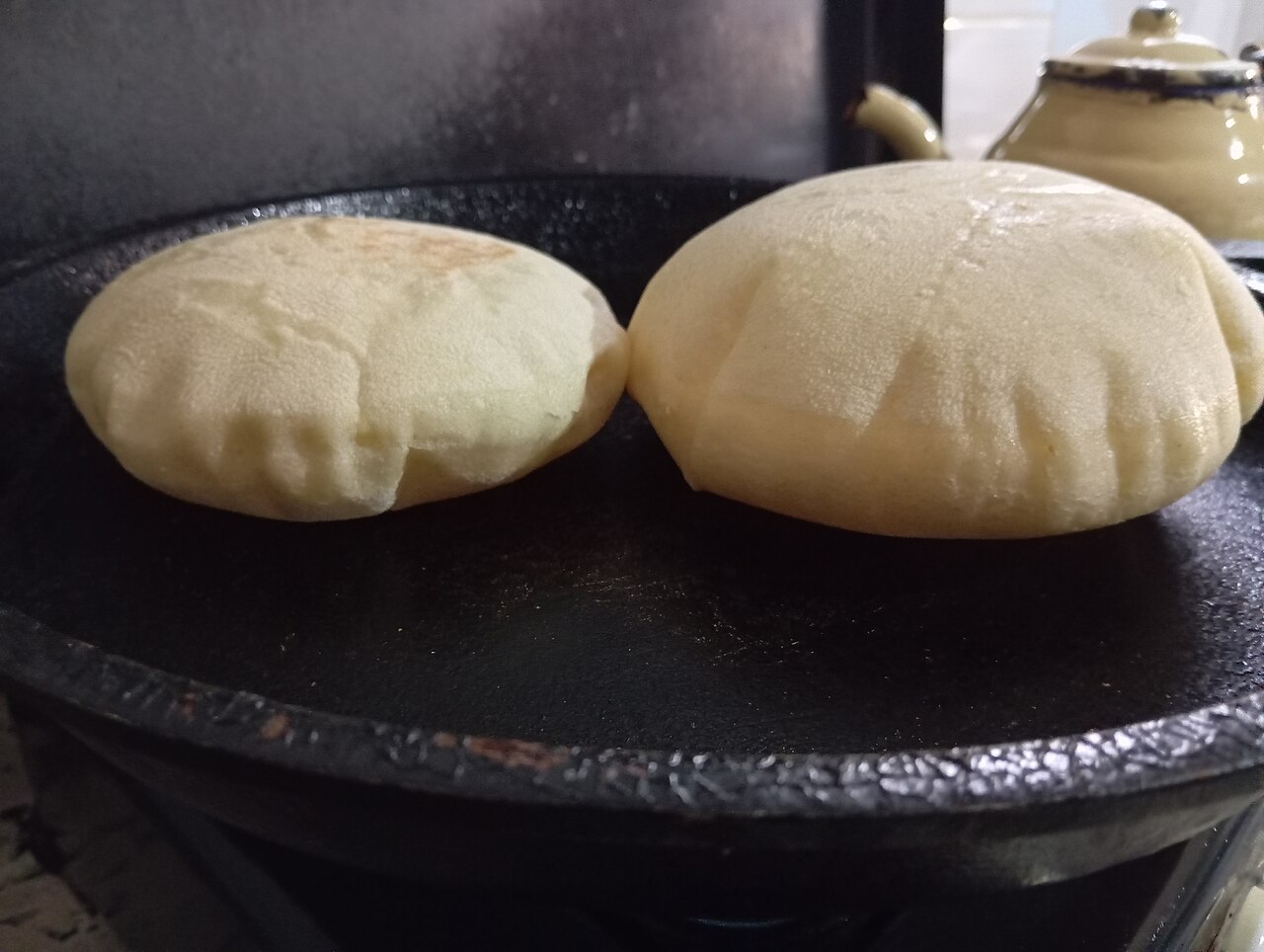
The secret is a soft, well-proofed dough and a pan over low heat so it cooks through without burning on the outside. When it puffs up, you know the dough and the heat are perfectly balanced.
Moroccan Batbout: Soft, Puffy Pan-Cooked Bread
المقادير
Method
- Mix the flour, semolina, salt, sugar, and yeast together.
- Add the warm water gradually and knead until you get a soft, smooth dough, working it well for a few minutes.
- Divide the dough into balls, roll them out into medium-thick rounds, and arrange them on a cloth dusted with semolina.
- Cover and let them proof for about 30 to 45 minutes, until puffy.
- Heat a pan over low heat and cook the rounds on both sides until they puff up and turn lightly golden.
- Let the batbout cool slightly, then split it open and fill it however you like.
ملاحظات
Letting the dough proof well is the secret to the hollow pocket inside.
Batbout can be frozen after cooking and reheated whenever you need it.
My secrets for batbout that puffs every time
Over the years I’ve learned the dough should stay a little soft and cling lightly to your fingertips at first, never firm or dry. That softness is what lets steam build up inside the round and make it puff. The fine semolina gives the crust a light texture and a nicer color as it browns. When you roll the rounds, keep them medium thickness and even: too thin and the batbout puffs fast but dries out, too thick and it stays raw in the middle. And let the pan heat properly over low heat before the first round goes in. One minute of patience here changes the whole result.
Variations and substitutions
You can drop the semolina entirely and use only flour for a whiter, softer batbout, or increase the semolina for a more rustic texture closer to country bread. Many cooks add a spoon of yogurt or a drizzle of olive oil to the kneading water, which makes the crumb softer and keeps it tender into the next day. For a whole-grain version, swap a third of the white flour for whole wheat, and expect the dough to need a little more water. And if you like a bit of fragrance, scatter sesame or nigella seeds over the rounds before cooking.
How to serve batbout and what goes with it
Batbout is best warm: you split it down the side and fill it with spiced kefta or pieces of chicken with vegetables and cheese. For breakfast I serve it plain, with butter and honey or with argan oil and ground almonds, and a glass of mint tea alongside. During Ramadan it becomes the perfect pocket for a filling of tuna, hard-boiled egg and olives. For children I fill it with cream cheese and chicken: it holds the filling without anything spilling out, which is exactly why they love it in their school lunchbox.
Storing, reheating and making ahead
Batbout keeps its softness for a day or two in a tightly closed bag at room temperature, and the softer the dough was, the longer it stays tender. To reheat, mist it with a little water and pass it for a few seconds over a hot pan or through the toaster, and it regains its suppleness. It freezes very well: pack it cold in a freezer bag and, when you need it, take it straight to the pan without thawing first. You can also prepare the rolled rounds, let them proof, then cook them right before serving for fresh batbout with the least effort.
Frequently asked questions
Why isn't my batbout puffing up?
It's usually because the heat is too high, the proofing was too short, or the rounds were rolled too thick. Lower the heat and let the dough proof fully.
What can I fill batbout with?
With kefta, chicken, tuna, grilled vegetables and cheese, whatever you like.
Can batbout be baked in the oven?
Traditionally it's cooked in a pan, but you can also bake it in a hot oven until it puffs up.
Can I make the batbout dough the night before?
Yes, knead it and leave it covered in the fridge; take it out an hour before cooking so it comes back to room temperature, then roll the rounds and let them proof a little.
Can I make batbout without yeast?
The yeast is what makes it puff and turn hollow, so it's hard to replace; in a pinch use baking powder, but the result will be closer to a flatbread.
What's the difference between batbout and harcha?
Batbout is a yeasted dough that you roll out and let puff until it's hollow; harcha is a dense semolina round made without proofing and cooked straight away, so it comes out heavier and more crumbly.
Photo: Wikimedia Commons — CC BY-SA