Thin French Crêpes, an Easy Recipe for Breakfast or Dessert
Crêpes are a treat that pleases grown-ups and kids alike, and you make them with things you always have on hand: flour, eggs, milk. It’s their thinness that sets them apart, and the endless choice of fillings, sweet or savoury, makes them perfect for breakfast, dessert or a quick snack.
The secret to a good crêpe comes down to two things: a smooth, lump-free pourable batter that’s had time to rest, and a properly hot pan. Swirl the pan quickly after pouring in the ladle so the batter spreads out thin and even.
Thin French Crêpes, an Easy Recipe for Breakfast or Dessert
المقادير
Method
- Whisk the eggs with the sugar, salt and vanilla.
- Add the flour alternating with the milk, whisking constantly until you have a smooth, lump-free pourable batter, then stir in the melted butter.
- Let the batter rest for about 20 minutes.
- Heat a non-stick pan and grease it with a little butter, pour in a ladle of batter while swirling the pan to spread it into a thin layer.
- Cook the crêpe for about a minute on each side, until it turns lightly golden.
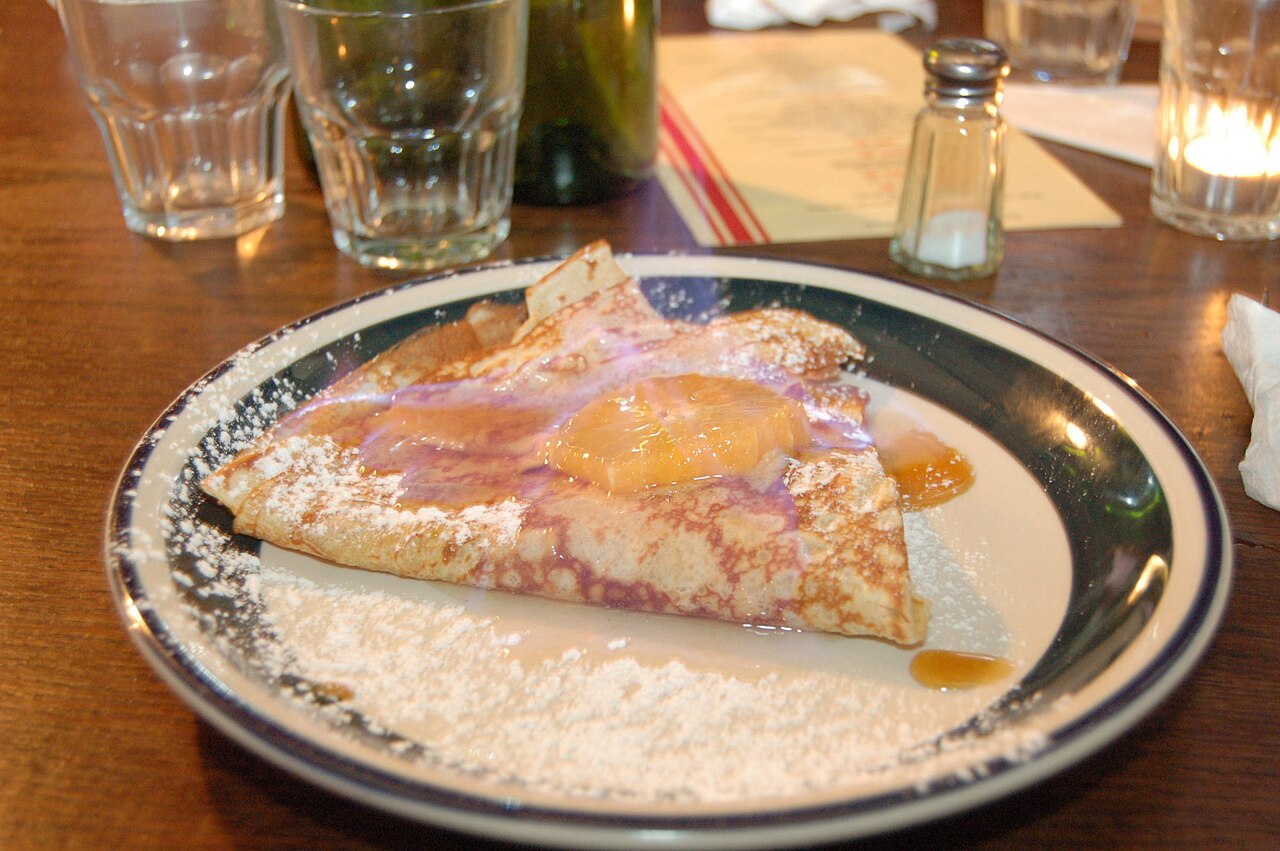
- Fill each crêpe with whatever you like, fold it into a triangle or roll it up, and serve right away.
ملاحظات
If the batter is too thick, add a little milk until it becomes pourable again.
The first crêpe is usually a test one, the time it takes to get the pan's heat and the amount of batter just right.
The secret to thin, even crêpes
The thing I worked out over the years is that the batter should pour almost like milk, never thick; if it clings to the ladle, loosen it with a splash more milk. That twenty-minute rest is no afterthought either: the flour hydrates, the last lumps dissolve, and the crêpe comes out supple rather than rubbery. As for the pan, I heat it well before the first ladle and grease it by wiping a knob of butter on with a paper towel, instead of flooding the surface. Once the batter goes in, I swirl straightaway with a flick of the wrist, because waiting even a second sets the centre before the rest can spread.
Variations and swaps with what you have
If you run short of milk, half water and half milk does the job, or a plant milk such as almond for a lighter version. Sometimes I swap a spoonful of plain flour for wholemeal, for a deeper flavour that suits a savoury filling. Anyone after a Moroccan touch can add a little orange blossom water instead of vanilla, and the whole batch smells of festive pastries. For the savoury version I drop the sugar and vanilla altogether, lean a bit harder on the salt, and fold chopped parsley into the batter. The melted butter, finally, can give way to a neutral vegetable oil if you want a lighter result without losing the tenderness.
How to serve them
In our house the sweet crêpe is eaten hot, straight from the pan, spread with chocolate or drizzled with honey and a scatter of toasted almonds. I like to pile them folded into triangles on one plate, so everyone can grab whatever they fancy. For a proper breakfast I serve them with mint tea or coffee, with chunks of banana and strawberry alongside. The savoury version I roll around melting cheese and a slice of turkey, with a light green salad on the side, and it turns into a real lunch. For children’s tea I stack them in layers of cream and jam, almost like a cake.
Storing, reheating and making ahead
If any crêpes are left over, I let them cool then stack them in an airtight box with a sheet of baking paper between each one; they keep two to three days in the fridge. To reheat, I pass them for a few seconds over a warm dry pan: they get their softness back, far better than a microwave, which dries them out. They freeze well too: separated by paper in a bag, they last about a month. The batter itself can be made the night before and kept covered in the fridge; it only turns out smoother, and just needs a quick stir in the morning before the first ladle.
Frequently asked questions
Why do my crêpes tear?
Usually because the batter is too thick, the pan isn't hot enough, or you're trying to flip them too soon.
Can I make the batter the night before?
Yes, it keeps overnight in the fridge and actually turns out smoother; just give it a stir before using.
What's the difference between sweet and savoury crêpes?
For savoury ones you leave out the sugar and vanilla, and fill them with cheese, vegetables and meats instead of sweet toppings.
How many ladles of batter make one crêpe?
One small ladle is enough for a medium pan; what matters is that a thin layer spreads once you swirl the pan. Too much batter gives a thick crêpe.
Do I need a special crêpe pan?
No, a non-stick pan with a flat base and low sides that make flipping easy works perfectly; the key is to heat it well before you start.
Why does the first crêpe usually come out badly?
Because the pan hasn't reached its ideal temperature yet and isn't properly seasoned with butter; treat it as a test crêpe to fine-tune the heat and the amount of batter.
Photo: Wikimedia Commons — CC BY-SA