Fresh Lebanese Tabbouleh with Parsley and Bulgur
Tabbouleh is a fresh, healthy salad that is almost entirely parsley. Its bright green color and tangy, refreshing flavor make it the perfect partner for grilled dishes and dinner gatherings. Light, nourishing and ideal for anyone watching their diet.
The secret to a great tabbouleh is chopping the parsley very finely and drying it well, and soaking the bulgur only briefly so it keeps some bite. Add the dressing right before serving to keep the salad fresh.
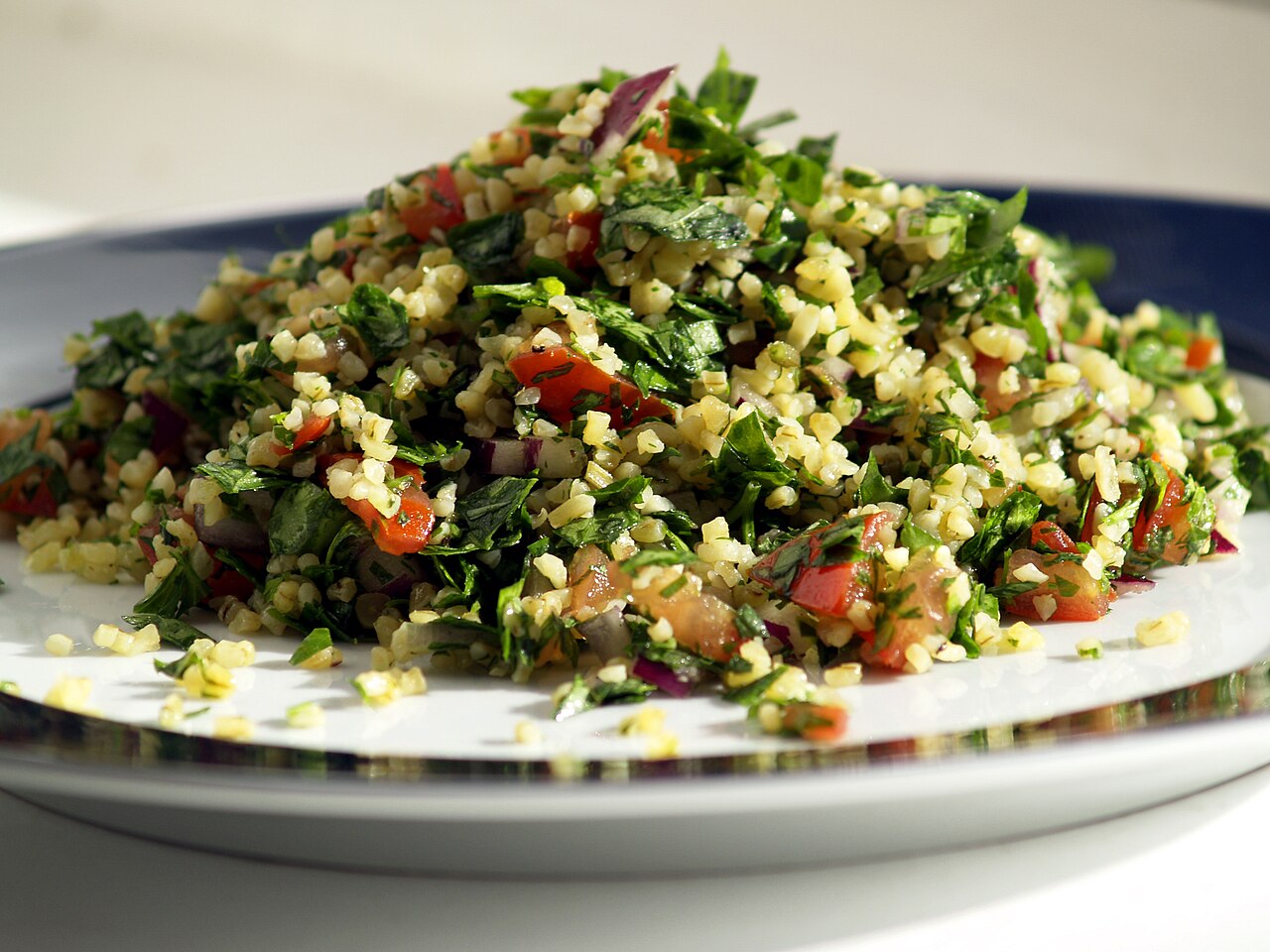
Fresh Lebanese Tabbouleh with Parsley and Bulgur
المقادير
Method
- Soak the bulgur in warm water for about 15 minutes, then drain and squeeze out the excess water.
- Finely chop the parsley and mint, then dry them well.
- Dice the tomatoes and onion into small pieces.
- Combine the parsley, mint, tomatoes, onion and bulgur in a bowl.
- Make the dressing by whisking together the lemon juice, olive oil, salt and pepper.
- Pour the dressing over right before serving, toss gently and serve the tabbouleh chilled.
ملاحظات
Add the dressing right before serving.
You can leave out the bulgur for an even lighter version.
Secrets to a great tabbouleh
The real secret to Lebanese tabbouleh is perfectly dry parsley. Wash it at least an hour ahead, shake off the water, then roll it in a clean cloth until it stops dripping, because any extra moisture thins the salad and weighs it down. Chop it with a sharp knife, never a blender, which bruises the leaves and releases their bitterness. Don’t drown the bulgur either: half a cup, barely covered with warm water, soaked for a quarter of an hour, is enough to keep some bite. Taste the lemon before pouring it all in, since its sharpness varies from one fruit to the next.
Variations and substitutions
If you have no bulgur, cooked and cooled quinoa gives the same result and makes the dish gluten-free. For a lighter version, drop the grain entirely and lean on the parsley. In high summer I like to fold in an extra handful of mint, or scatter a pinch of sumac over the top for a pleasant smoky tang. Seed the tomatoes if they are very juicy, otherwise they make the salad soggy. And swap the small onion for a little green onion when you want a softer, less pungent flavour.
How to serve tabbouleh
At our table, tabbouleh is the natural partner to grilled meats: its acidity cuts through the richness and wakes up the appetite. Serve it well chilled in a wide dish, with lettuce leaves or tender vine leaves that guests scoop up by hand, the way it is eaten in Lebanon. It also belongs beside hummus and baba ganoush on a mezze spread, or with strips of grilled chicken for a light meal. A final drizzle of extra-virgin olive oil just before serving revives its colour and aroma.
Storing and making ahead
Tabbouleh is best eaten the day it’s made: once dressed, it loses its freshness quickly. To get ahead, chop the parsley and mint, dice the tomatoes and onion, keep each one chilled, and soak the bulgur; but don’t combine anything, and add the lemon and oil only minutes before serving. Leftovers keep in an airtight container in the fridge for one day at most. They wilt a little but stay tasty. Never freeze it, since the vegetables turn to mush as they thaw.
Frequently asked questions
Is bulgur essential in tabbouleh?
It is part of the traditional recipe, but you can reduce or skip it for a lighter salad.
How do I keep tabbouleh fresh?
Chop and dry the ingredients well, add the dressing at the last minute, and serve the salad chilled.
Can I swap the bulgur for quinoa?
Yes, cooked quinoa is a gluten-free alternative that gives a similar texture.
Why does my tabbouleh taste bitter?
It usually comes from chopping the parsley in a blender, which bruises it and releases its juices. Use a sharp knife and make sure the parsley is completely dry first.
Which bulgur should I use for tabbouleh?
Fine bulgur is best, since it softens with soaking alone, needs no cooking, and stays light among the parsley.
Can I make tabbouleh without onion?
Yes, simply leave it out, or use a little green onion instead for a milder flavour without the bite of raw onion.
Photo: Wikimedia Commons — CC BY-SA