Moroccan Chicken Tagine with Olives and Preserved Lemon
Few Moroccan homes go without chicken tagine with olives, especially on Fridays or when a guest is on the way. The smell of saffron and ginger rising from the pot is enough to gather the whole family in the kitchen before the food is even done.
At heart the recipe is simple: chicken cooked slowly in a spiced sauce, then olives and preserved lemon added toward the end. What sets one tagine apart from another isn’t a secret ingredient, but the patience of a low flame and the quality of the saffron and homemade preserved lemon.
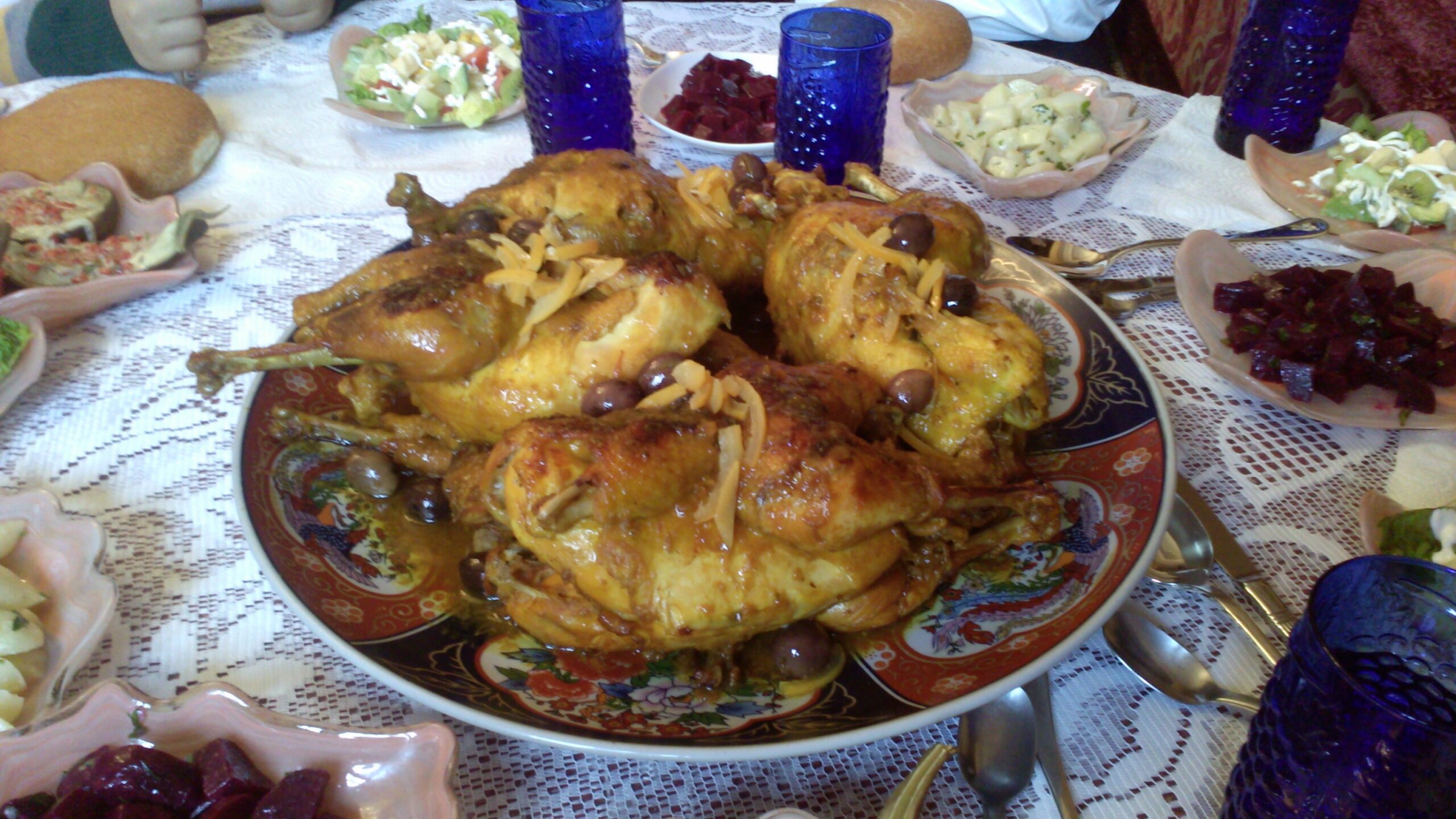
Moroccan Chicken Tagine with Olives and Preserved Lemon
المقادير
Method
- In the tagine or a wide pot, mix the chicken with the grated onion, garlic, spices, saffron, salt and olive oil.
- Toss to coat the chicken well and let it marinate for 15 to 20 minutes (or 1 hour in the fridge if you have time).
- Place over medium heat, add the bunch of coriander and parsley and a cup of water, then cover.
- Let it simmer on low heat for about 45 minutes, stirring now and then and adding a little water if the sauce reduces too much, until the meat is tender.
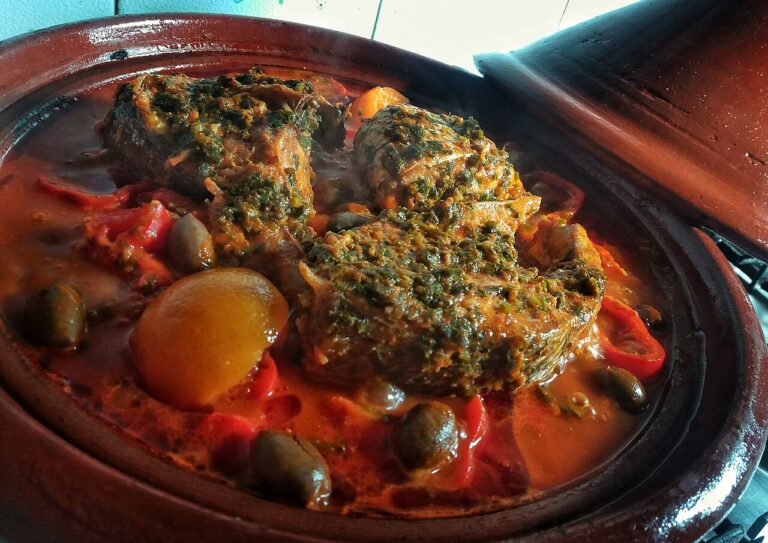
- Add the blanched olives and the preserved lemon, then leave for another 10 minutes so the flavours come together.
- For a thicker sauce, lift out the chicken and let the sauce reduce, then spoon it back over the chicken. Serve hot with fresh Moroccan bread.
ملاحظات
Free-range chicken has deeper flavour but needs longer cooking: keep an eye on the water level.
Rub the saffron strands between your fingers before adding them to release colour and aroma.
The secret to a good sauce and a golden colour
It all starts with the grated onion: as it melts down over low heat, it gives the sauce its body and colour without any flour or trickery. Don’t rush the cooking, since farm chicken loves slow heat that loosens the meat until it slips off the bone. For the saffron, crush the threads in a little warm water before adding them, and the colour and aroma will spread through every piece. Salt right at the end, because the preserved lemon and the olives already carry their own saltiness; more often than not the tagine needs nothing more.
Variations and substitutions for what you have on hand
No preserved lemon ready? Slice a fresh lemon thinly and add it with a pinch of salt in the last quarter hour; the flavour comes close, even if it isn’t quite the same. Green olives can be swapped for stuffed olives or a milder variety to suit your taste. For a warmer note, tuck a small cinnamon stick in with the spices. If you want a lighter plate, chicken breast works well, as long as you shorten the cooking so it doesn’t dry out. Some Moroccan households drop in a cut potato that soaks up the sauce beautifully.
How to serve it at the table
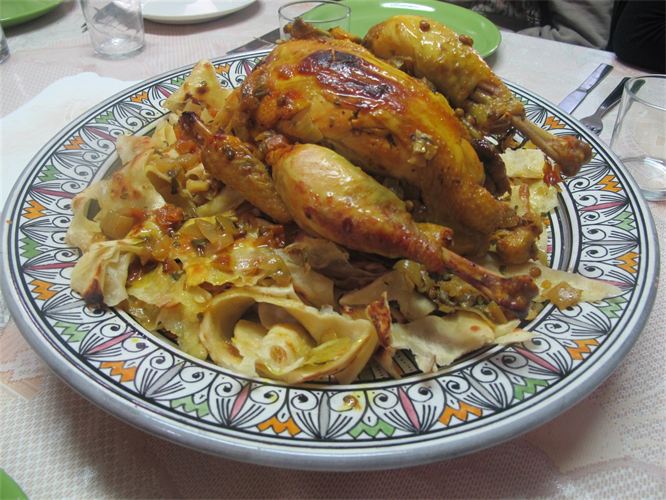
Chicken tagine with olives is served piping hot in its dish, and fresh Moroccan bread is its natural partner: you dip it in the sauce before reaching for the meat. A light green salad or a small plate of spiced carrots cuts through the richness of the sauce and brings balance to the meal. On a Friday table it often sits beside another main course, but it stands on its own with bread for a family dinner. Scatter the olives and lemon pieces over the top as you serve, so the dish looks generous and inviting.
Storing and reheating the next day
This is the kind of dish that tastes even better on the second day, once the spices have settled. Keep leftovers in an airtight container in the fridge for two to three days. To reheat, set the dish over low heat with a couple of spoonfuls of water or stock so the sauce regains its silkiness, and avoid a hard boil that would break up the chicken. Making it ahead is easy: marinate the chicken overnight in the fridge to save time and deepen the flavour. I’d skip freezing, though, since the preserved lemon loses its texture once thawed.
Frequently asked questions
Can I use chicken breasts?
Yes, but cut the cooking time to about 25-30 minutes so the meat doesn't dry out.
How do I remove the bitterness from green olives?
By blanching them two or three times in water, as noted in the tips.
What is this tagine served with?
Traditionally with Moroccan bread, and often alongside a light salad.
Why is my sauce watery and won't thicken?
Usually too much water or too high a flame. Add water little by little, then lift out the chicken at the end and let the sauce boil for a few minutes until it reduces.
Can I cook it in the oven instead of on the stove?
Yes. After starting it on the hob, move the covered dish to a 170 °C oven for about an hour, then add the olives and lemon in the last ten minutes.
How many people does this tagine serve?
A chicken of around 1.2 kg usually feeds four with bread, and up to five if you add potatoes or serve it alongside another dish.
Photo: Indiana Younes — CC BY-SA 4.0 license