Moroccan Baghrir, the Soft and Foolproof Thousand-Hole Pancakes
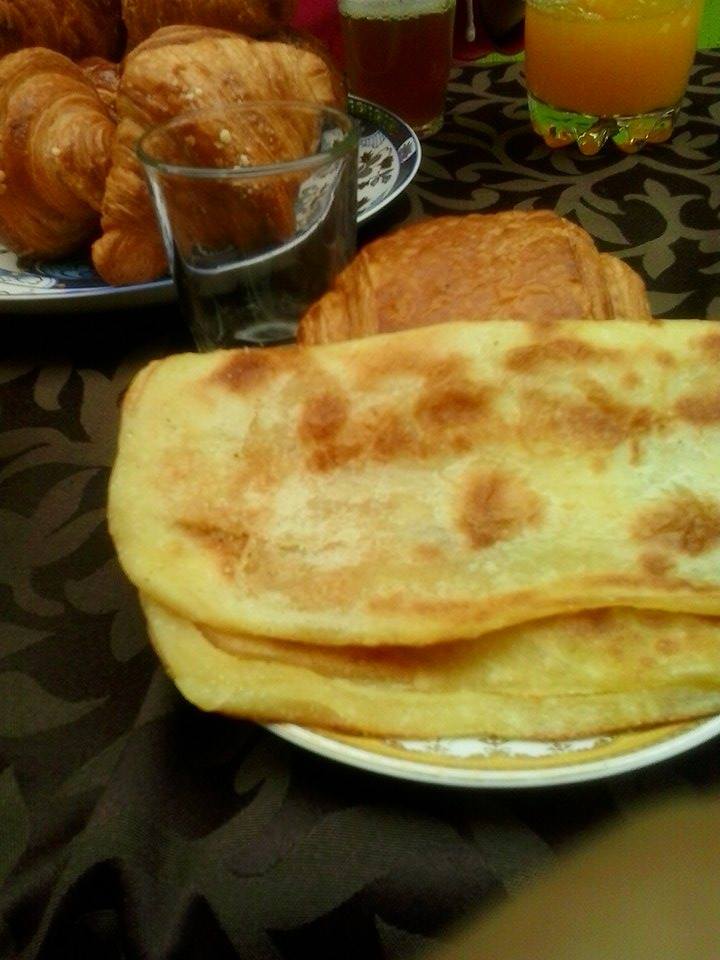
Baghrir is one of the great joys of a morning breakfast or a Ramadan table. What makes it special are those little holes that cover the whole surface, letting it soak up the honey-butter mix like a sponge. When the holes appear, you know the batter is just right.
The recipe relies on fine semolina and a good blitz in the blender until the batter is smooth and pourable. The secret is letting the batter rest and ferment, and using a pan that’s hot enough for all the holes to open up at once.
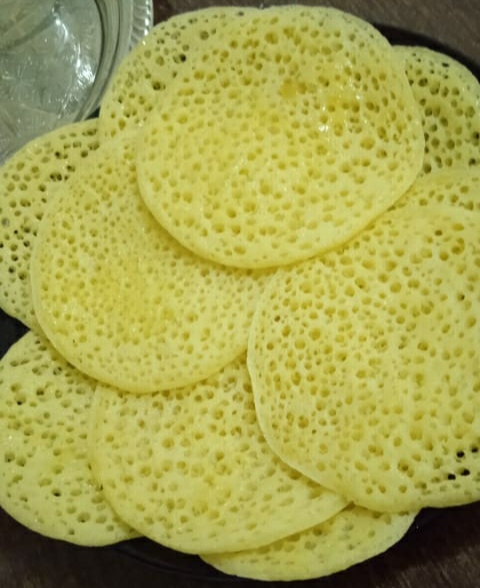
Moroccan Baghrir, the Soft and Foolproof Thousand-Hole Pancakes
المقادير
Method
- Put the semolina, flour, yeast, baking powder, sugar, and salt into the blender.
- Add the warm water gradually and blend well until you have a pourable, perfectly smooth batter with no lumps.
- Cover the batter and let it rest for 20 to 30 minutes, until it starts to ferment and bubbles appear on the surface.
- Heat a non-stick pan, pour in a ladleful of batter without spreading it, and let it cook on one side only.
- Once the holes form and the top is dry, lift out the baghrir without flipping it, then repeat until the batter is used up.
- Stir the honey into the melted butter, warm it slightly, then serve the baghrir hot, dipped in or drizzled with the mixture.
ملاحظات
Never flip the baghrir; it cooks on one side only.
Serve it fresh the same day, it's best while hot.
Secrets to a baghrir full of holes
It all starts with the consistency: the batter should be thin, closer to milk than to a thick cream. If it feels heavy, loosen it with warm water a spoonful at a time. The blender genuinely matters here, since it works in some air and dissolves the semolina completely so no lumps survive. Don’t rush the pan either; let it heat properly before the first ladle and test it with a drop of water that should dance across the surface. Above all, never spread the batter. Pour it and let it spread on its own. That is when the holes open by themselves and the top dries without you ever flipping the pancake.
Variations and substitutions
If you can’t find fine semolina, blend in a larger share of flour, but expect fewer holes and a texture closer to a regular pancake. For a deeper flavour, add a pinch of wholegrain semolina or a spoon of barley flour. Baking powder stays optional: the yeast alone is enough if you give the batter a longer rest, though the powder is a useful safety net on cold days. As for the water, swap part of it for warm milk to make the baghrir softer and more golden, a touch I love for a festive table when I want it to feel a little special.
How to serve it and what to pair it with
Baghrir is served warm, and there’s no negotiating that: cold, it loses its charm and turns rubbery. The classic way is a warm mix of honey and melted butter poured over the top, which it soaks up like a sponge thanks to all those holes. At breakfast I serve it with a glass of mint tea and sometimes a scattering of toasted sesame. To change things up, spread it with apricot jam, a little soft cheese, or even sweetened almond butter; all of them suit it without drowning its plain, gentle taste.
Storing and making ahead
You can make the batter the night before and keep it in the fridge, then take it out half an hour before cooking so it returns to room temperature and wakes up again. Cooked baghrir keeps covered in the fridge for two days, and freezes well for weeks if you separate the pieces with baking paper so they don’t stick. To reheat, skip the microwave, which toughens them; a few seconds in a warm pan or a moment over steam brings back their softness. And only pour on the honey mix at serving time, since adding it too early soaks the pancake and ruins its texture.
Frequently asked questions
Why aren't there any holes in my baghrir?
The most common reasons are a batter that's too thick, inactive yeast, or a pan that's too cold. Adjust the batter so it's nice and pourable, and make sure the pan is hot.
Do I need an electric blender?
A blender guarantees a smooth, lump-free batter, so it's preferred, but you can also mix well by hand and then strain the batter.
What is baghrir served with?
Traditionally with a honey-and-butter mix, but you can also serve it with jam or cheese, depending on your taste.
Can I make baghrir without yeast?
You can rely on baking powder alone, but you'll get fewer holes and a plainer flavour; it's the yeast that gives baghrir its characteristic fermented taste.
How much batter should I use per baghrir?
A small ladle is enough for a medium pancake; the key is not to spread the batter but to let it spread on its own, so it stays thin and even.
Why does baghrir turn rubbery?
That's normal once it cools; warm it briefly in a pan or over steam before serving and it will turn soft again.
Photo: Wikimedia Commons — CC BY-SA