Moroccan Msemen, Soft, Flaky and Foolproof
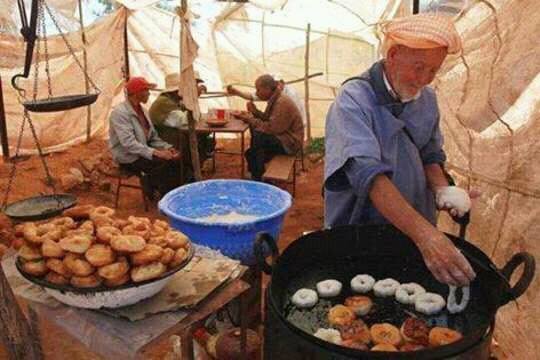
Msemen is the star of the Moroccan breakfast table. Those flaky layers that pull apart at the first bite come from stretching the dough paper-thin, brushing it with oil and semolina, then folding it up. With honey or cheese, nothing beats it alongside a glass of tea.
The whole secret lies in a very soft dough that’s left to rest, and in stretching it on an oiled surface until it’s almost see-through. Don’t be afraid of the sticky dough, that’s exactly what gives msemen its tenderness.
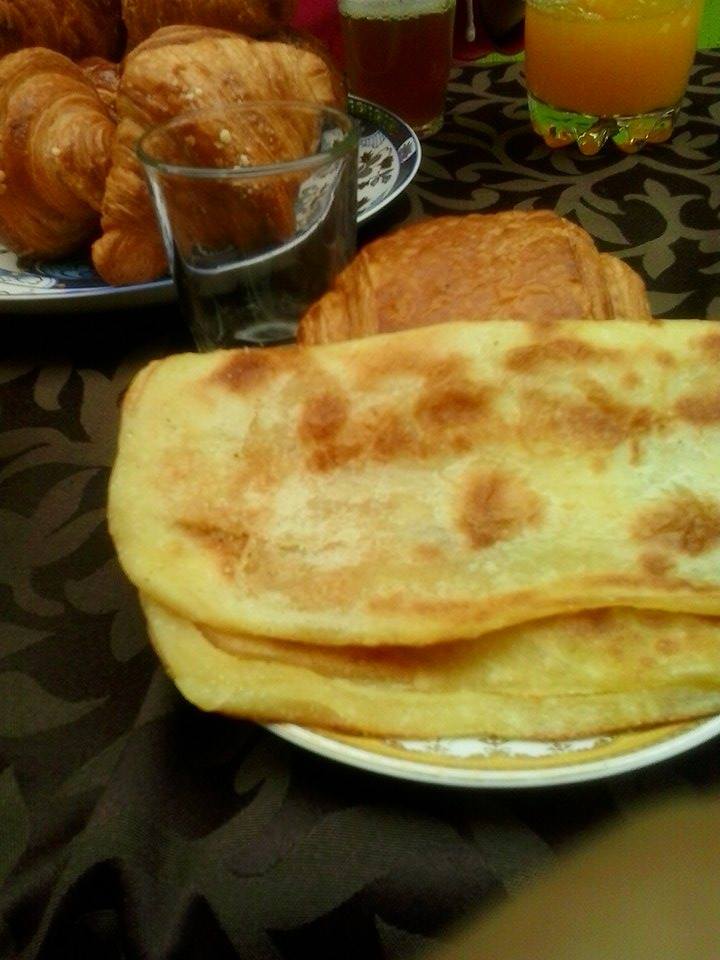
Moroccan Msemen, Soft, Flaky and Foolproof
المقادير
Method
- Mix the flour, semolina, salt and sugar, then add the water gradually and knead until you get a soft, elastic dough.
- Knead well for a few minutes until the dough is smooth, then divide it into balls, oil them and let them rest for 15 minutes.
- Stretch each ball on an oiled surface until it becomes very thin and almost transparent.
- Sprinkle on a little semolina and butter, then fold the dough into a square by bringing the edges toward the center.
- Stretch the square out slightly, then cook it in a hot pan with a little oil until golden on both sides.
- Serve the msemen hot with honey and butter, or with cheese.
ملاحظات
Stretch the dough as thin as you can to get clearly defined layers.
You can fill the msemen with seasoned onions and tomatoes for a savory version.
The secrets to truly flaky msemen
The layers all begin with the dough, so keep it very soft, almost sticky, and resist the urge to add flour to firm it up. Let it rest at least fifteen minutes after you shape it into oiled balls, since that rest relaxes the gluten and makes stretching far easier. Oil your work surface generously instead of flouring it, then stretch each ball with your fingertips until it is nearly see-through and you can make out the table beneath. When you fold, be generous with the semolina, because that is what keeps the layers apart. Cook over medium heat, not high, so the inside sets before the surface scorches.
Variations and substitutions to suit you
For a richer msemen, swap part of the water for warm milk: the surface browns better and stays softer. Anyone who likes a rustic flavour stirs a little melted butter into the oil at stretching time. You can also fill the msemen before folding, with a cooked onion and tomato mixture or seasoned minced meat, turning it into a proper meal rather than just breakfast. If you are cutting back on white flour, replace a third with wholemeal, keeping in mind the dough will need a touch more water to stay soft and workable.
How to serve it at the table
In our home msemen is served hot, straight from the pan; once it cools it loses half its charm. Honey and butter are the classic pairing, melting together over the warm layers. Those who prefer savoury top it with a slice of soft cheese or a drizzle of olive oil, with a glass of mint tea on the side. During Ramadan it goes alongside harira and dates. Children love it rolled around a wedge of melting cheese or a spread of pistachio paste. Moroccan mint tea stays the companion you never skip, whatever the filling.
Storing, reheating and making ahead
Msemen stays soft for a full day if you cover it with a clean cloth once it has cooled a little. To reheat, give it a minute on each side in a warm pan and it regains its light crispness; skip the microwave, which turns it rubbery. To save time, shape the raw squares and stack them between sheets of parchment in a freezer bag, then cook them from frozen without thawing. You can also make the dough the night before and keep it covered in the fridge, taking it out half an hour before stretching so it softens and handles easily.
Frequently asked questions
Why did my msemen turn out tough?
Usually because of a stiff dough or not enough resting time; make sure the dough is nice and soft, give it enough rest, and stretch it thin.
Can msemen be frozen?
Yes, shape it without cooking and freeze it between sheets of paper, then cook it straight away whenever you need it.
What's the difference between msemen and meloui?
Meloui is rolled into a spiral while msemen is folded into a square; the dough and method are very similar.
Why does the dough tear while I'm stretching it?
Usually from too little resting time or a surface that isn't oiled enough; oil the surface and your fingers and stretch gently from the centre outwards.
Can I make msemen without semolina?
You can, but the semolina is what gives the layers their crispness and separation; without it the result is closer to a soft pancake.
What flour is best for msemen dough?
All-purpose flour gives an excellent result; for thinner layers, blend in a little fine durum wheat semolina.
Photo: Wikimedia Commons — CC BY-SA