Moroccan Sellou (Sfouf) with Almonds and Sesame
Sellou, also known as sfouf, is one of those Moroccan sweets that never leaves the Ramadan table, and never misses a home that has just welcomed a newborn. It’s full of energy, blending the flavours of toasted flour, almonds, sesame and honey, while the scent of cinnamon and anise fills the whole house.
The most important step is toasting the flour over low heat until it turns golden without ever burning. That slow toasting is exactly what gives sellou its deep flavour and its long shelf life.
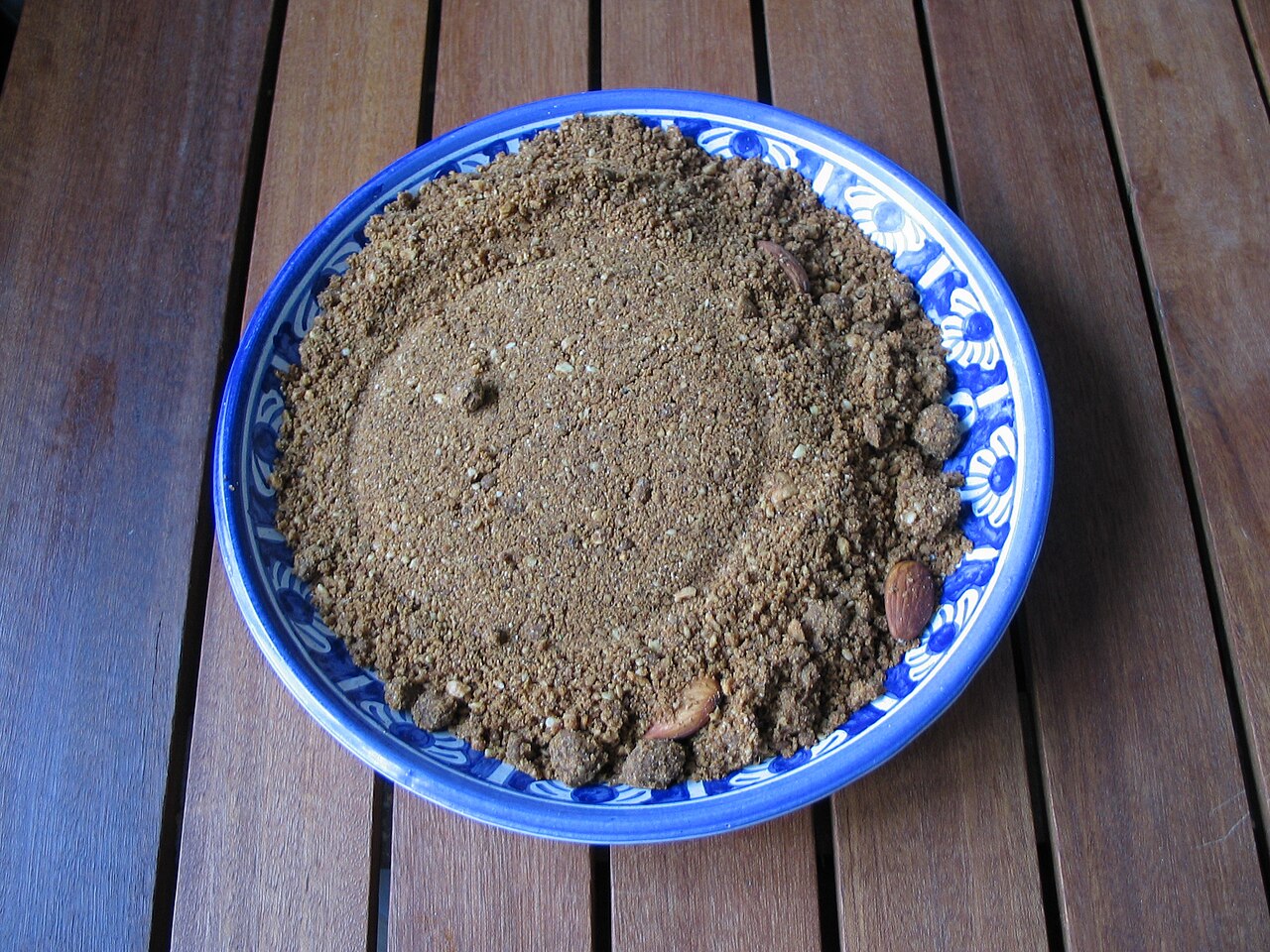
Moroccan Sellou (Sfouf) with Almonds and Sesame
المقادير
Method
- Toast the flour in a pan over low heat, stirring constantly, until it turns golden and smells fragrant, then let it cool.
- Grind the toasted sesame and the fried almonds, then mix them into the toasted flour.
- Add the cinnamon, anise, powdered sugar and ground mastic, and stir everything together well.
- Gradually work in the melted butter and honey, kneading until the mixture holds together and is easy to shape.
- Press the sellou into your serving dish in a pyramid shape, or spread it flat, then decorate with fried almonds.
- Let it rest for a little while before serving. It keeps for a long time in an airtight container.
ملاحظات
Adjust the honey and butter to get the texture you like best (crumbly or firm).
Sellou keeps for weeks in an airtight container, which makes it perfect for suhoor.
The secret to toasting it right
The whole success of sellou rests on one step: toasting the flour. I never turn the heat up, and I stand right over the pan stirring without stopping, because a single moment of distraction is enough to scorch the bottom and leave a bitterness that ruins the entire batch. My signal that the flour is ready is a pale golden colour and a smell like toasted biscuits. I toast the almonds and the sesame separately, since sesame colours far more quickly. And I let everything cool completely before mixing: hot flour melts the butter too fast and turns the dough greasy instead of keeping it sandy and crumbly.
Variations and swaps to suit you
Sellou happily takes adjustments without losing its character. If you want something lighter, cut back on the honey and lean on the icing sugar alone; if you like it richer, add more almonds, or even a handful of toasted, ground walnuts or peanuts. Butter gives a warm, homemade note, while smen (clarified butter) lends a more traditional depth, and both work well. In some households a portion of the butter is replaced with local olive oil for a stronger flavour. The gum arabic is entirely optional, so leave it out if its scent is unfamiliar to you; sellou stays delicious without it.
How to serve it
At home we shape sellou into a small pyramid on a plate, studded with fried almonds and sometimes dusted with icing sugar. It’s the perfect companion to a glass of mint tea, in the morning or late afternoon, and during Ramadan it earns its place on the iftar table alongside harira and dates. Because it’s so rich, a little goes a long way, so I serve it in small spoonfuls or in bite-sized balls to keep it from sitting heavy. With a cup of strong, bitter coffee, the balance between its sweetness and the bitterness of the cup is wonderful.
Storing and making it ahead
One of the best things about sellou is that it improves over the days: the flavours marry and the taste deepens after two or three days. I always keep it in a tightly sealed glass or metal tin, somewhere dry and away from steam and humidity, where it stays good for several weeks without refrigeration. I’d suggest making it a few days before Ramadan to save yourself time; it’s eaten cold, just as it is, with no reheating. If it seems a little dry after a while, simply work in a spoonful of warm honey or melted butter and it will soften right back up.
Frequently asked questions
What's the difference between sellou and sfouf?
They're two names for more or less the same sweet; the wording just changes from one Moroccan region to another.
Is sellou good for new mothers?
It's traditionally offered to women who have just given birth because it's so rich in energy, almonds and sesame, and because everyone simply loves the taste.
How do I store sellou for a long time?
In a tightly sealed container, away from moisture, it stays good for several weeks.
Why did my sellou turn out slightly bitter?
It's almost always because the flour or almonds caught and burned during toasting over too high a heat. A gentle flame and constant stirring solve it.
My sellou dough won't hold together, what should I do?
Add the melted butter and honey little by little until the mixture gathers between your fingers. If it stays too sandy, it just needs a bit more fat or honey.
Can sellou be made without sugar for diabetics?
Yes, you can skip the icing sugar and sweeten a small amount with a little natural honey or a sweetener, bearing in mind that the almonds and sesame are still very energy-dense.
Photo: Wikimedia Commons — CC BY-SA