Refreshing Greek Salad with Feta and Olives
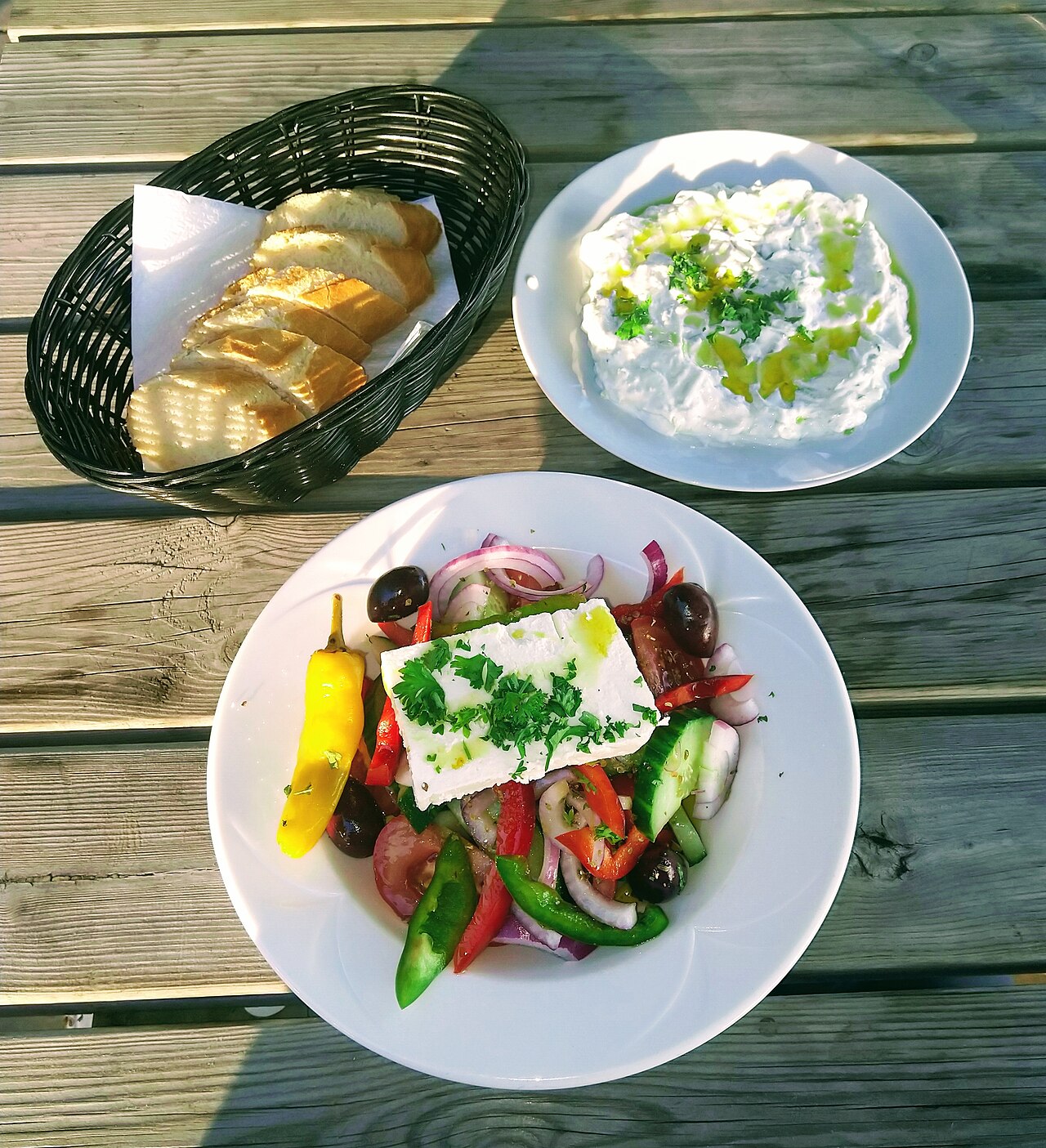
Greek salad is a celebration of Mediterranean flavors: ripe tomatoes, crisp cucumber, pepper, onion and a slab of feta on top, all coming together with good olive oil and a scattering of oregano. Fresh, healthy and quick to throw together, it becomes a complete light meal with a piece of bread on the side.
The secret lies in fresh ingredients cut into big chunks, a good olive oil and a light hand when tossing. The traditional version has no lettuce, and the feta goes on whole, never crumbled.
Refreshing Greek Salad with Feta and Olives
المقادير
Method
- Cut the tomatoes and cucumber into big chunks.
- Slice the pepper into rings and the onion into thin slivers.
- Arrange the vegetables in a serving dish and add the olives.
- Place the whole block of feta on top of the salad.
- Dress with olive oil, vinegar, oregano, salt and pepper.
- Serve right away with some bread.
ملاحظات
Cut the vegetables into big chunks and keep them nice and fresh.
Place the feta on top in one piece rather than crumbling it.
The secret to a proper Greek salad
It all starts with the tomato. Pick ripe, fragrant ones and cut them into big wedges rather than small dice, so they hold their juice instead of bleeding it into the bowl. Leave the cucumber unpeeled to keep its crunch, and if the red onion tastes sharp, soak the slices in cold water for a few minutes. Don’t toss the salad hard; one or two gentle turns are enough to coat everything in olive oil. Lay the feta on top in a single piece and crumble the oregano between your fingers, which brings out its scent. And salt only at the very last minute, right before serving.
Variations and substitutions
At the height of summer I’ll often add a handful of capers, or swap the green pepper for a sweeter coloured one, and the salad turns out softer in flavour. No Kalamata on hand? Any ripe Mediterranean black olive will do, as long as it isn’t overly salty. Real Greek sheep’s-milk feta is the gold standard, but a mild local white cheese stands in nicely. I sometimes mix a little dried thyme into the oregano. And for a richer version, crumbling the feta through the salad instead of leaving it whole makes it creamier, though that does stray from tradition.
How to serve it and with what
This salad is best at room temperature, never straight from the fridge, because the cold dulls the flavour of the tomato and the olive oil. I serve it with warm rustic or homemade bread to mop up the juices and oil left in the bottom of the bowl, which is honestly the best part. It makes a fine side for grilled fish or chicken, and stands on its own with bread for a light lunch on a hot day. A small extra bowl of olives and a wedge of lemon on the side round out the table the Mediterranean way.
Storing and making it ahead
A tomato salad doesn’t like sitting around once it’s dressed. The trick is to prep everything ahead but keep it separate: chop the vegetables and store them covered in the fridge for a few hours, set the feta and olives aside, and add the oil, vinegar and salt only minutes before serving. That way everything stays crisp and won’t wilt. If you have leftover dressed salad, keep it refrigerated and eat it within the day; the cucumber will soften and the tomato will go watery, but the taste holds up. Never freeze it, as raw vegetables lose all their texture.
Frequently asked questions
Does Greek salad contain lettuce?
The traditional version (horiatiki) has none — it relies on tomatoes, cucumber and pepper.
What can I use instead of feta?
A similar salty white cheese works, but feta is what gives that authentic flavor.
Can I make it ahead?
Chop the ingredients in advance, but add the dressing and salt just before serving so the salad doesn't go soggy.
Should I use vinegar or lemon in the dressing?
Either works. Vinegar (usually red wine vinegar) stays closer to the Greek original, while lemon gives a lighter, brighter note. Taste and go with whichever you prefer.
Why does my salad pool water at the bottom?
It's usually from salting the tomatoes too early, which draws out their juice. Dress it right before serving and use firm tomatoes rather than overly ripe ones.
Which olive oil should I use?
A good-tasting extra virgin olive oil, since it's used raw and its flavour comes through clearly. A poor oil ruins the salad no matter how fresh the vegetables are.
Photo: Wikimedia Commons — CC BY-SA