Indian Chicken Biryani with Spices and Basmati Rice
Biryani is a true masterpiece of Indian cooking, a festive dish that brings together long-grain basmati rice and chicken marinated in rich, generous spices. The ingredients are cooked in layers and then steamed together, so the flavours mingle and every grain of rice takes on the aroma. It’s a dish worth every bit of effort, perfect for any special occasion.
The secret to a great biryani comes down to three things: rice cooked only halfway before steaming, chicken left to marinate long enough, and gentle steam cooking (the dum) until everything is done, without the rice clumping together.
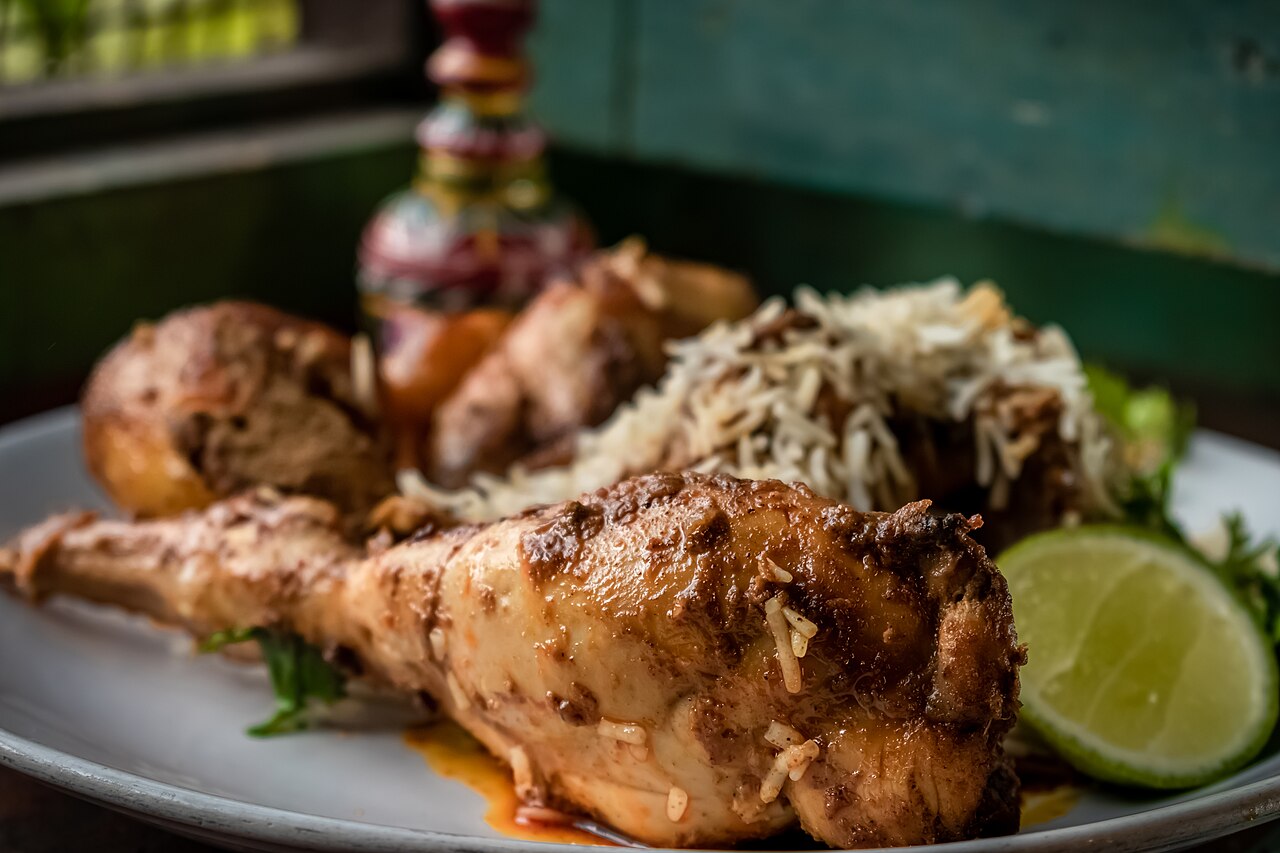
Indian Chicken Biryani with Spices and Basmati Rice
المقادير
Method
- Marinate the chicken with the yoghurt, spices, garlic, ginger and salt, then let it rest for one hour.
- Fry the onions until deeply golden (set some aside for garnish), then cook the marinated chicken until it is partly done.
- Boil the basmati rice with the cardamom, cinnamon and bay leaves until only half cooked, then drain it.
- Arrange a layer of chicken in the pot, then a layer of rice, and scatter over the coriander, mint, saffron milk and fried onions.
- Cover the pot tightly and cook over very low heat (dum) for about 20 minutes, until everything is steamed through.
- Gently fold the biryani together when serving and garnish with the fried onions.
ملاحظات
Very low heat during the dum stage keeps the rice from sticking.
Saffron and fried onions give the biryani its colour and flavour.
The secret to separate, fluffy grains
For me, the one step that makes all the difference is parboiling the rice only halfway before steaming. Let it cook through and it turns soft and clumpy once the dish is assembled. I salt the cooking water generously so the basmati takes on flavour from the inside, and I drop in cardamom, bay leaves and cinnamon. Another thing I learned over time: fry the onions slowly until they reach a deep amber colour, because they are what bring the sweetness and depth to the whole pot. When you steam, turn the heat to its lowest setting and seal the lid tightly so the steam stays trapped and perfumes the rice.
Variations and swaps for what you have on hand
If you can’t find ready-made biryani spice, blend your own with cumin, ground coriander, turmeric and a little clove and cinnamon, and you’ll land very close to the original taste. The yoghurt can be swapped for a plant-based milk soured with a few drops of lemon if dairy doesn’t suit you. For a vegetarian version, trade the chicken for vegetables such as potato, carrot, peas and cauliflower in the same marinade, and you get a lovely vegetable biryani. As for the saffron, if the price puts you off, a pinch of turmeric with a touch of rose water gives a similar colour and aroma without stretching the budget.
How to serve it and what goes alongside
At home, biryani never goes out on its own. It comes with raita, that whisked yoghurt loosened with grated cucumber, mint and a little cumin, which tames the heat of the spices and balances the plate. An onion salad with lemon and sumac brings a refreshing tang next to the rich rice. Serve it piping hot in a wide dish so the grains don’t get crushed, scattered with fried onions and fresh coriander leaves. A glass of cold buttermilk or a cup of mint tea rounds off the meal at our celebrations.
Storing, reheating and making it ahead
Biryani keeps for up to three days in an airtight container in the fridge, and it often tastes better than on day one because the spices have worked their way into the rice. To reheat, I sprinkle a couple of spoons of water over it, cover it, and warm it gently on low heat or by steaming so it doesn’t dry out. You can marinate the chicken and fry the onions the day before and keep them chilled, which cuts down the work on the day itself. Freezing is possible, but the rice softens a little after thawing, so I prefer the dish fresh or from the fridge within two days.
Frequently asked questions
What's the difference between biryani and kabsa?
Biryani is cooked in layers and then steamed, while in kabsa the rice cooks directly in the broth, and the spices differ too.
Can it be made with meat?
Yes, swap the chicken for lamb and extend the cooking time.
Which rice is best for biryani?
Long-grain basmati rice is ideal for its aroma and separate, fluffy grains.
Why does my biryani rice turn out sticky and clumped?
Usually because the rice was cooked too long before the steaming stage. Parboil it only halfway, drain it well, and fold the dish gently when serving rather than stirring it too much.
Can biryani be cooked in one pot without layering?
You can do it to save time, but the flavour will be closer to spiced rice than to a true biryani. It's the layered steaming that gives it its distinctive aroma.
How long should the chicken marinate?
An hour already gives a good result, but if you leave it overnight in the fridge in the yoghurt and spices, it comes out more tender and deeper in flavour.
Photo: Wikimedia Commons — CC BY-SA