Crispy Chickpea Falafel That Holds Together Every Time
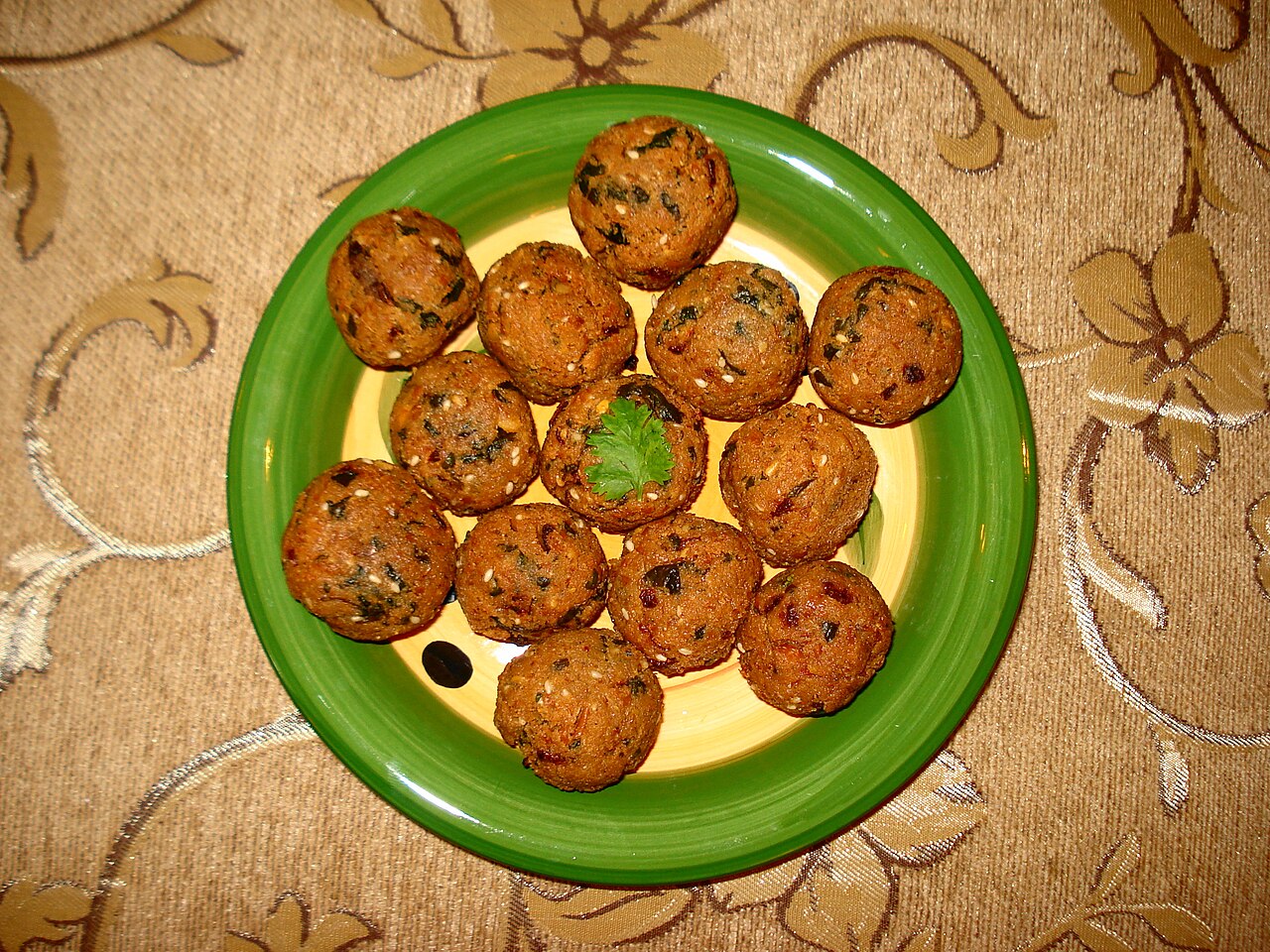
Falafel is the street-food favorite that took the world by storm, both for its flavor and because it’s filling and fully plant-based. Little balls of chickpeas and herbs, crisp on the outside and fragrant green on the inside, tucked into bread with tahini and veggies for a sandwich you simply can’t resist.
The golden rule: use soaked chickpeas that haven’t been cooked, because cooked ones make the falafel fall apart in the oil. And let the mixture rest in the fridge before shaping so it firms up nicely.
Crispy Chickpea Falafel That Holds Together Every Time
المقادير
Method
- Drain the soaked chickpeas thoroughly (do not boil them).
- Blend the chickpeas with the onion, garlic, parsley, cilantro and spices in a food processor until you get a cohesive, fairly smooth mixture.
- Add the salt and baking soda, then let the mixture rest in the fridge for half an hour.
- Shape into balls or small patties, and sprinkle with sesame seeds if you like.
- Fry in hot oil over medium heat until golden and crispy.
- Lift them out onto paper towels and serve with bread, tahini and salad.
ملاحظات
Resting the mixture in the fridge helps it hold together.
Add baking soda for a lighter texture.
The secret to crispness and a mixture that holds
Real crispness starts with the chickpea itself: soak it overnight in cold water so it swells and softens, but never boil it. While blending, stop the processor now and then and scrape down the sides until the mixture is fine and compact, without turning it into a wet paste. Resist adding any water, even if the mixture looks dry. It’s the baking soda and the rest in the fridge that give falafel their airy centre. As for the oil, keep it at a medium heat: too cool and the balls drink it up, too hot and the outside burns while the middle stays raw.
Variations on the basic mixture
The basic recipe takes well to tweaks, depending on your taste. You can swap half the chickpeas for soaked dried fava beans, as they do in Egypt, for a deeper flavour and a darker colour. Lean into the parsley and coriander if you want a vivid green centre, or fold in a spoonful of chopped spinach. Those who like heat scatter a pinch of red pepper or add a chopped fresh chilli along with the garlic. And if you have no fresh coriander, parsley alone will do, with a touch more cumin to make up for the missing fragrance.
How to serve them and what goes alongside
Falafel deserve good company. The classic way is to tuck them into warm pita with tahini loosened with lemon, slices of tomato and cucumber, and a few pickles whose sharpness cuts through the richness of the frying. They also make a fine open plate over a green salad or with hummus drizzled in olive oil. I like to serve them with a yoghurt sauce of mint and garlic, whose coolness answers the heat of the balls fresh from the oil. Don’t forget a bowl of olives and pickled red onion on the side.
Storing and making ahead
Falafel are best hot, straight from the pan, but if any are left, keep them in an airtight container in the fridge for two or three days. To bring back the crunch, skip the microwave, which softens them; reheat them for a few minutes in a moderate oven or an air fryer until they firm up again. The raw mixture, on the other hand, can be shaped and frozen on a tray, then moved to a bag; fry them straight from the freezer, no thawing needed. That way you prepare a big batch ahead and cook off as many as you need, whenever you like.
Frequently asked questions
Why does my falafel fall apart in the oil?
The most common reason is using cooked chickpeas or a mixture that's too wet; use soaked chickpeas and let the mixture rest.
Can I bake falafel?
Yes, brush them with oil and bake until browned, but frying gives a much crispier result.
Can I freeze falafel mixture?
Yes, shape it and freeze it raw, then fry straight from the freezer.
How long do the chickpeas need to soak?
Twelve to fourteen hours in cold water. The chickpeas should roughly double in size and soften enough to break under pressure, yet stay raw and uncooked.
Do I need a food processor, or will a blender do?
A food processor is better because it grinds the chickpeas to a compact, crumbly texture. A regular blender needs liquid to turn, which makes the mixture wet and causes it to fall apart while frying.
Which oil is best for frying falafel?
Any neutral vegetable oil that handles high heat, such as sunflower or canola. Keep a medium temperature around 170 °C so the balls cook through before the surface burns.
Photo: Wikimedia Commons — CC BY-SA