Moroccan Chicken and Vegetable Couscous
For Moroccans, couscous is the sacred Friday dish. The whole family gathers around one big shared platter, and everyone eats from the spot in front of them. Rolling the grains by hand and steaming them more than once is exactly what sets an ordinary couscous apart from one that melts in your mouth.
Don’t rush this dish. The vegetables go in stage by stage, depending on how long each one needs to cook, and the grains are steamed three times, moistened and fluffed between each round. The result is worth every minute.
Moroccan Chicken and Vegetable Couscous
المقادير
Method
- In the bottom of the couscoussier, brown the chicken with the onions, spices, tomatoes, oil and a little water.
- Add the water, chickpeas, cilantro and parsley, then let the broth come to a boil.
- Moisten the couscous with water, salt and a drizzle of oil, fluff it with your hands, then place it in the top of the couscoussier to steam.
- Once the steam rises through the grains, take them out, fluff them with a little water, then repeat the steaming two or three times until they are cooked and light.
- Add the vegetables to the broth according to their cooking time (the firmer ones first, the tender ones later) so they cook through without falling apart.
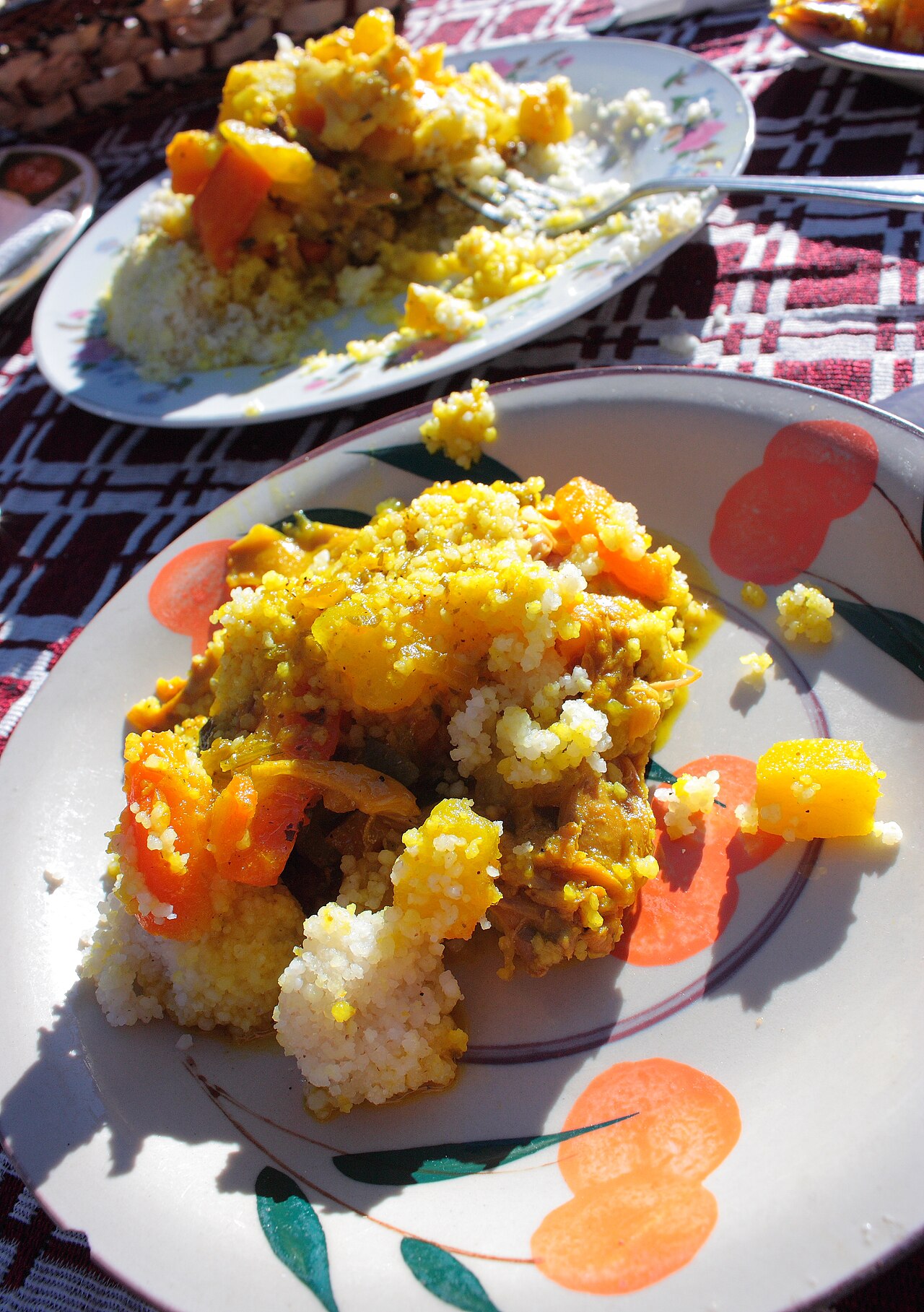
- Spoon the couscous onto a wide platter, arrange the chicken and vegetables on top, then ladle over the broth. Serve hot.
ملاحظات
Stir a spoonful of smen into the grains after the final steaming for a richer flavor.
Serve a little extra broth on the side for anyone who likes their couscous nice and moist.
The secret to light grains and a fragrant broth
The rule I learned from my grandmother is simple: never set the semolina over a cold broth. Wait until steam is rising strongly from the top of the couscoussier before you tip in the grains and start working them. Use the palm of your hand rather than your fingertips to fluff them, and add the water drop by drop so the grains don’t clump. Butter or smen goes in at the very end, still hot, to make the grains glisten and fall apart cleanly. As for the chicken, let it brown a few minutes with the onion in the oil before you add water; that first searing is what gives the broth its golden colour and depth.
Variations and substitutions
Without chicken, this dish works beautifully with veal or lamb, though the meat needs longer on the heat, so start it earlier. Red pumpkin is dear to me for its sweetness; for a lighter version, swap it for chunks of potato. Zucchini, turnip and carrot stand in for one another easily depending on the season, and cabbage brings a flavour I’m fond of. For a vegetarian couscous, leave out the chicken, double the vegetables and chickpeas, and enrich the broth with a spoon of smen and a little turmeric; the taste stays whole.
How to serve it and what goes alongside
Moroccan Chicken and Vegetable Couscous is presented in one large dish: the grains at the bottom, the chicken and vegetables piled in a pyramid on top, and the broth ladled over just before serving so the semolina doesn’t soak up all the liquid. Keep a small bowl of hot broth on the side for each person to add as they like. Buttermilk or cold milk is a traditional partner to couscous in many households, especially in summer. And a glass of mint tea to finish rounds off the Moroccan table beautifully.
Making ahead and storing leftovers
Couscous is usually cooked the same day, but you can steam and fluff the grains in the morning, then steam them again for a few minutes before the meal: they turn soft as if just made. Leftovers keep two to three days in the fridge in sealed containers, the grains in one and the broth and vegetables in another. To reheat, sprinkle the grains with a little water, cover, and warm them over steam or in the microwave so they don’t dry out. Steamed semolina also freezes well: reheat it straight from the freezer with a splash of water.
FAQ
How many times should couscous be steamed?
Usually three times, moistening and fluffing the grains between each round of steaming.
Can I use instant couscous?
Yes, to save time, but traditional steaming gives you lighter, far tastier grains.
What are the seven vegetables in couscous?
They vary by region, but typically include carrots, turnips, zucchini, pumpkin, squash, cabbage and chickpeas.
How do I keep the couscous grains from clumping?
Lightly moisten the grains and fluff them by hand between each steaming, then add a spoon of oil or smen at the end. Don't drown them in water all at once.
Should I add all the vegetables at the same time?
No, add them according to firmness: carrots and turnips first since they cook longest, then zucchini and pumpkin at the end so they don't fall apart.
What is a couscoussier and what can replace it?
It's a two-part pot: the lower chamber holds the broth and the perforated top steams the grains. If you don't have one, set a metal colander over a wide pot and seal the gap with a damp, floured cloth.
Photo: Wikimedia Commons — CC BY-SA